Xi’an’s Terracotta Army: See the Archaeology Beyond the Rows
The terracotta warriors are part of a much larger funerary landscape associated with the First Qin Emperor. Looking closely at the archaeological setting, figure details and interpretation helps visitors understand more than the famous overview photograph. The central question is what the surviving material can actually tell us.
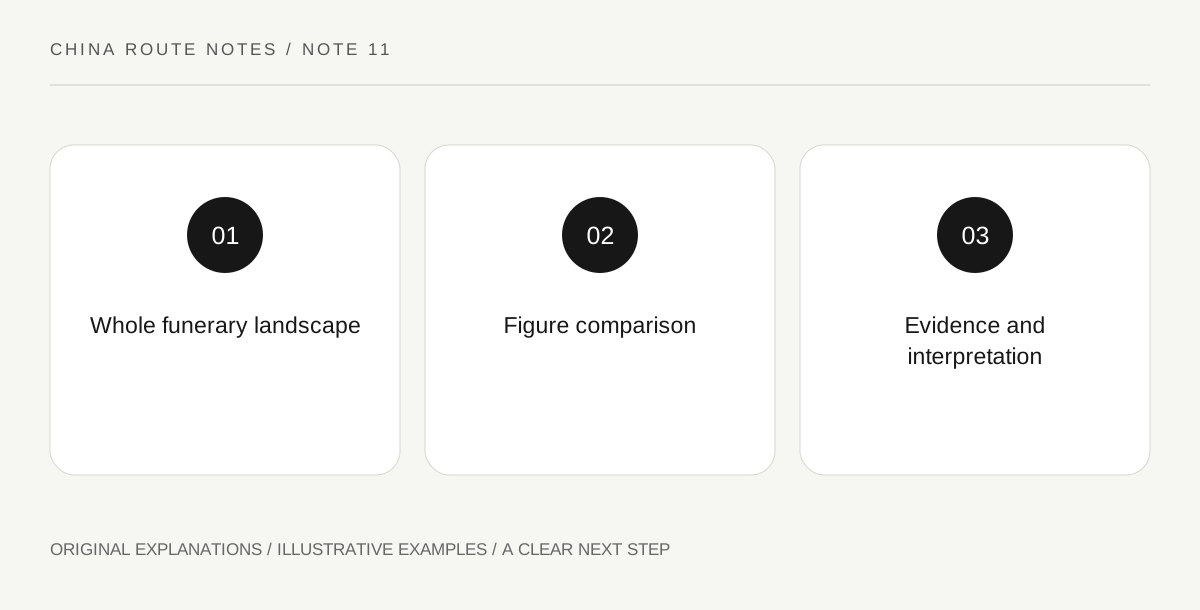
Original explanatory diagram. Read the full method and limitations below.
Place the pits within the larger complex
UNESCO describes the mausoleum as a major funerary ensemble with burial pits, architectural remains and other associated features. The army is therefore a component of a broader project, not a stand-alone sculpture exhibition commissioned for a modern museum. Before entering a display area, look at a site plan and distinguish the burial mound, excavated pits and current visitor facilities. A heritage boundary also differs from the areas open to tourists. Do not infer that every feature on an archaeological map is accessible or that an unexcavated location can be visited inside.
Alternate overview with a close comparison
An overview communicates the arrangement and scale of the figures, but it can obscure the details that make them evidence. Select two figures shown in a way that permits close study and compare posture, clothing, hair, armor or equipment using the display labels. Ask which differences are documented as meaningful and which remain uncertain. A modern viewing angle may make features appear similar or different simply because of distance and lighting. Avoid asserting a soldier’s personal identity from an expressive face. Specific details support careful questions about representation and military organization rather than imagined biographies.
Notice excavation and restoration as part of the story
An archaeological display may present damaged material, reconstructed arrangements and conservation work alongside more complete figures. Read the museum’s explanations of what was found, what has been reassembled and what remains under study. Missing pieces are information about survival, not evidence that the original makers left a task unfinished. A neat row today can conceal a complicated history of burial, breakage and research. If a display mentions pigment or production methods, record the particular evidence cited instead of generalizing from a souvenir reproduction. Scientific interpretation should remain tied to the object or context that supports it.
Spend one question on craft and one on power
The site can be read through both manufacture and imperial organization. Ask how the figures were made and how an undertaking on this scale was organized, keeping the museum’s evidence separate from speculation about workers’ individual lives. Then compare a craft detail with the overall arrangement visible from the viewing area. This gives the visit two useful scales. Confirm current ticketing and permitted routes through the museum’s own visitor information, and allow a visit shape that includes reading rather than only moving between photographic viewpoints. A knowledgeable guide is most useful when you have questions that can be answered with the evidence on display.
Illustrative evidence note
A visitor sketches the arrangement of one visible pit and compares the armor on two labeled figures. The note has three columns: observed feature, museum explanation and remaining question. A missing hand goes in the observation column; a claim about an original weapon is added only if the interpretation supports it. This keeps curiosity and evidence connected.
Practical checks
Optional checkboxes save only in this browser.
Questions that come up
Can I see the emperor’s tomb interior?
Do not assume so from the name mausoleum or from an overall site map. Use the museum’s current information to establish which areas and exhibits are open. Archaeological significance and visitor access are different matters.
Does every different face represent a known individual?
Visible variation is not enough to identify a historical person. Use the museum’s interpretation for what scholars can establish about production, representation and organization, and keep unsupported personal stories clearly separate.
References and scope
These sources support the factual background. Examples and exercises are original illustrative teaching material. References do not imply endorsement.
- UNESCO: First Qin Emperor mausoleum — Army pits within a much larger funerary complex, military and craft evidence.