Suzhou Gardens: Learn to Notice Framed Views and Changing Space
A classical Suzhou garden can make a compact place feel like a sequence of landscapes. Water, rocks, plants and buildings work together, and the view changes as you move. A slow comparison of two positions teaches more than trying to photograph every pavilion in a single visit.
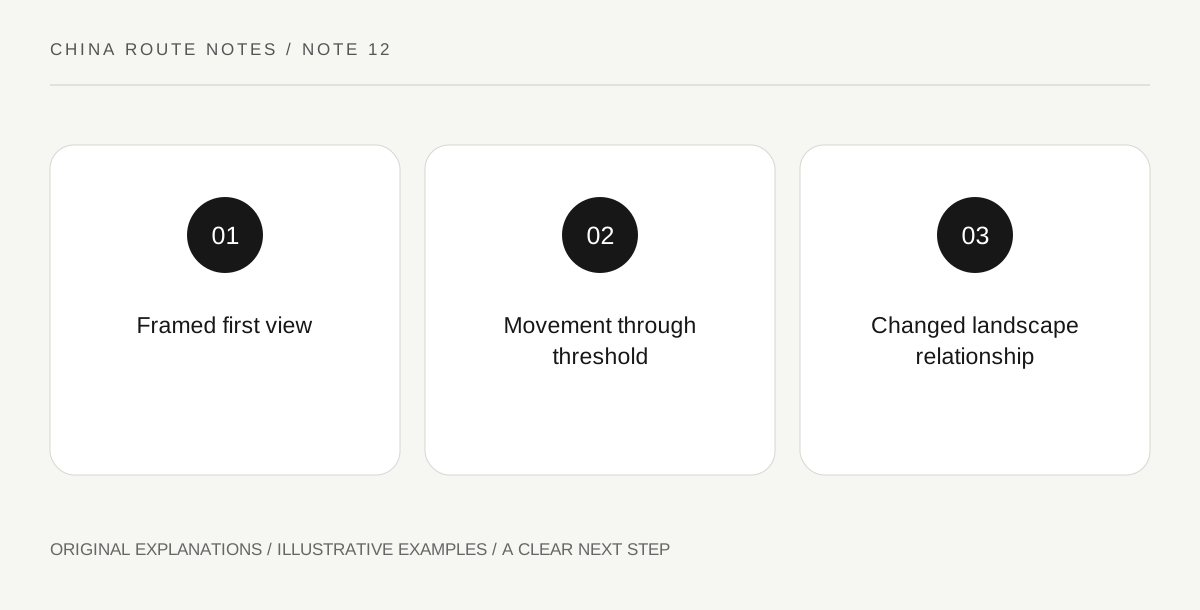
Original explanatory diagram. Read the full method and limitations below.
Understand the garden as a composed microcosm
UNESCO describes the listed Suzhou gardens as expressions of mountain-and-water landscape within limited residential space. The useful idea is composition, not a claim that the garden is untouched nature. A rock arrangement can suggest a larger terrain while a pond provides reflection and a change in openness. Start by identifying the main elements from a visitor plan, then look at how they interact. Avoid expecting one famous garden to explain every other listed garden. Each has its own scale and arrangement, so choose one for a careful first reading before attempting a rapid sequence across the city.
Compare a view before and after a threshold
Choose a public doorway, window opening or corridor turn and observe what it includes and conceals. Move to the next permitted position and compare the new arrangement. The change might reveal water, shift a building off-center or turn a previously hidden rock into a focal point. Describe the physical difference before assigning a symbolic meaning. A frame is something you can observe; a claim about its intended literary reference needs interpretation or documentation. Keep circulation clear while making the comparison. A useful sketch can be made from a short stop without holding a narrow passage for a long photo session.
Use the path to study enclosure and release
Notice when a route narrows, bends, opens onto water or brings you close to a building. Ask how these transitions affect the apparent size of the garden. A compact place may offer many distinct experiences because it does not reveal all its spaces at once. The modern authorized route can differ from historical domestic movement, so read the visitor circulation alongside the garden’s history. Do not treat every blocked door as a puzzle to solve. A barrier may protect fabric or private operations, and the next accessible view often explains enough without entering a restricted area.
Read one inscription in its specific setting
If an official label translates a pavilion name or inscription, connect its words to the location where they appear. Ask whether the name directs attention to a view, a sound, a season or a scholarly association. Avoid turning a single translation into a universal code for Chinese culture. If the translation is unavailable, record the location and seek a reliable explanation later rather than inventing one from decorative shapes. Choose current admission and opening information from the garden operator, since a heritage description does not establish reservations or special opening programs. The goal is a connected reading of place, text and movement.
Illustrative two-position exercise
A visitor observes a pond through a corridor opening, then walks to an authorized waterside viewpoint. The first sketch contains a compressed frame and the second includes more open water and a changed roofline. A translated pavilion label supplies one documented association. The visitor records what changed physically before discussing how the garden made the space feel larger.
Practical checks
Optional checkboxes save only in this browser.
Questions that come up
Are all nine listed gardens one attraction?
No. The UNESCO property comprises distinct gardens. Choose the garden names and locations deliberately and check each operator’s current access arrangements rather than assuming one ticket or entrance covers them all.
Do I need to know Chinese poetry first?
It can enrich a visit, but careful spatial observation is already useful. Start with visible relationships and use reliable labels or translations to add specific literary context instead of guessing every reference.
References and scope
These sources support the factual background. Examples and exercises are original illustrative teaching material. References do not imply endorsement.
- UNESCO: Suzhou gardens — Nine listed gardens, mountain-water microcosms and spatial composition.