Huangshan: Separate the Mountain Route From the Arrival City
A railway ticket labeled Huangshan does not by itself describe a mountain visit. The arrival settlement, scenic-area approach, mountain access and route on top are separate parts of the journey. Understanding those layers helps visitors enjoy the landscape without mistaking a fast arrival for a complete plan.
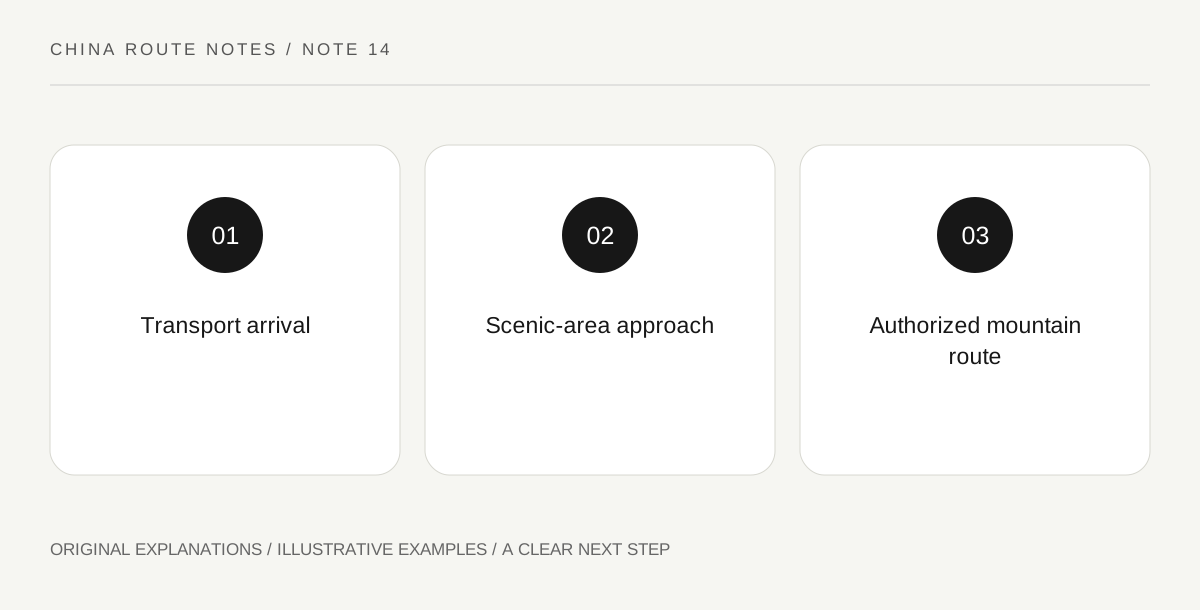
Original explanatory diagram. Read the full method and limitations below.
Build a map with four different layers
Start with the transport arrival point, then mark the settlement where you will stay, the scenic-area approach and the actual mountain route. A city label on a reservation may cover a broad area rather than the entrance you need. Add the transfer between each layer using current operator information. Do not assume that a railway station, hotel district and mountain gate share a walkable center simply because their names contain Huangshan. This distinction is particularly useful on arrival day, when an optimistic map can otherwise turn a short rail journey into an unexpectedly long sequence of road and local transport.
Choose a landscape theme rather than every viewpoint
UNESCO identifies Huangshan’s granite peaks, old pines and importance to Chinese landscape art. Select a small set of visual questions around those features: how a tree relates to exposed rock, how ridges overlap, or how a path changes the apparent depth of a view. The theme gives the visit value even if conditions do not match a famous photograph. A sea of clouds or sunrise is a condition to encounter, not a service included with a ticket. Avoid making a risky schedule or exposed waiting position depend on obtaining a particular atmospheric effect.
Read a route in climbs, descents and transitions
A cableway may remove part of the elevation change while leaving significant walking and steps elsewhere. Read the current route map and ask about the specific sections between your intended stops. Count the descent and the return to accommodation as real parts of the day. If you plan to stay on the mountain, distinguish that booking from a similarly named property in the arrival city. Confirm the route by which you can reach it under the operating arrangements in effect. A straight line between two peaks on a map does not describe the effort or time involved in following the authorized paths.
Let access and conditions determine the final shape
Check the scenic area’s current closures, transport operation and weather guidance, then choose a route compatible with the group’s ability. Keep an explicit shorter option that still contains a meaningful landscape observation. On narrow paths, make notes or photographs only where stopping does not obstruct others or expose you to an edge. Stay within authorized routes and do not interpret a track visible beyond a barrier as an alternative. The landscape’s artistic history can encourage attentive looking without turning the visit into a hunt for a named view at any cost.
Illustrative map correction
A visitor initially marks one Huangshan railway arrival pin and assumes the rest is a walk. A second map separates the hotel settlement, scenic-area approach, cableway segment and mountain path. The visitor chooses fewer viewpoints and a feasible overnight location. The exercise changes the journey design before tickets and accommodation become difficult to revise.
Practical checks
Optional checkboxes save only in this browser.
Questions that come up
Does a mountain cableway eliminate most walking?
It covers a particular segment, not necessarily your whole route. Check the paths, stairs, elevation changes and return connections between the places you want to visit.
Can I plan around a guaranteed sea of clouds?
No. Atmospheric conditions are not guaranteed by a mountain ticket. Give the route other worthwhile observation goals and use current weather and closure information when making the final decision.
References and scope
These sources support the factual background. Examples and exercises are original illustrative teaching material. References do not imply endorsement.
- UNESCO: Huangshan — Granite landscape, pines and artistic significance.