Paying in China: Understand Card, QR Code and Cash Transactions
China’s payment choices are easier to understand when you separate the account, the payment instrument and the merchant’s acceptance method. Linking a foreign card is one step. Completing a particular purchase is another. A small purchase can reveal more than a successful account setup screen.
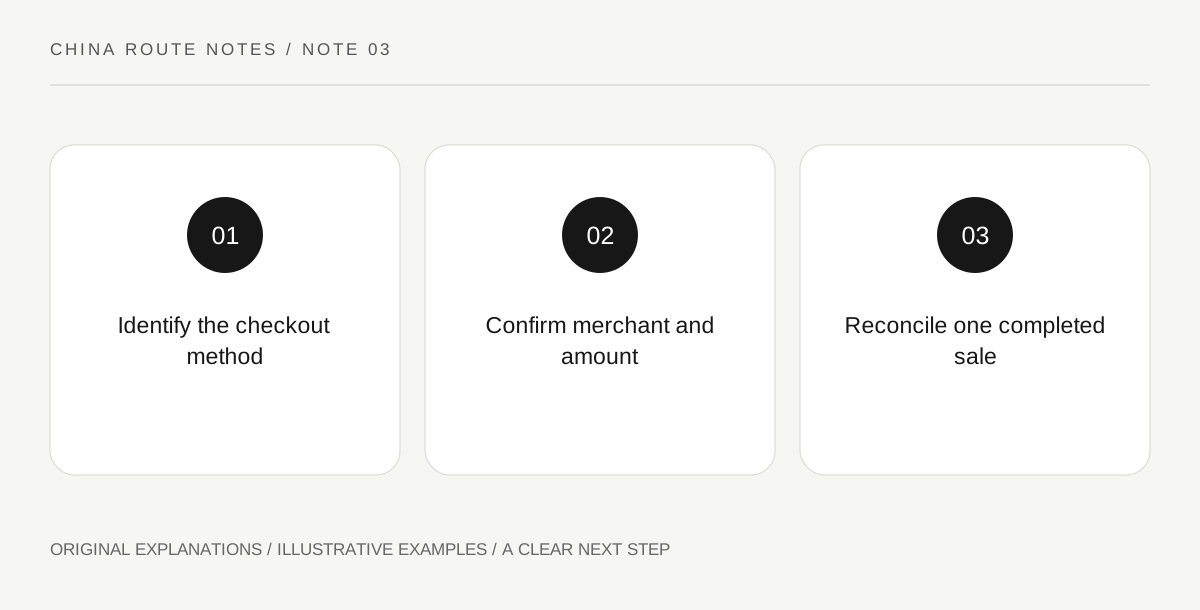
Original explanatory diagram. Read the full method and limitations below.
Read what the payment action actually does
A merchant may scan your payment code, or ask you to scan its collection code. A transport code can be a different product from the ordinary shopping code in the same app. Before confirming, identify the merchant and amount on screen and check that you are paying for a purchase. Do not interpret every QR square as a universal checkout device. A code might open a menu, membership page or other service first. Keep the phone screen private when displaying a payment credential and follow the application’s own security guidance rather than sending codes in a chat.
Check the linked card at the transaction level
The government living guide describes binding overseas cards to supported payment products and warns that issuers verify the binding. It also says supported card brands, limits and fees depend on the product. Consequently, avoid building a trip budget around a single remembered fee threshold. Read the actual confirmation screen and your card issuer’s terms, including currency conversion and any issuer charges. If a transaction fails, record the error without exposing the card number and ask the provider or bank about that event. Account activation does not promise every merchant and transaction type will be supported.
Give cash a practical role
The central bank’s payment guidance retains cash as a fallback and encourages access to small denominations. Carrying only one large note is less useful for a modest purchase than having change appropriate to the amount. Use authorized exchange services or suitable ATMs and retain any receipt needed for your records. Separate the cost of obtaining cash from the price of the purchase. A merchant’s card terminal, an app and an ATM can each have different network compatibility. Being ready to use a second method is an operational choice rather than evidence that one method always works everywhere.
Reconcile the receipt before repeating a payment
If the phone stalls after confirmation, ask the merchant whether the sale completed before trying again. A pending authorization and a settled charge may display differently in your card account. Keep the merchant name, time and amount so a duplicate or refund can be discussed accurately. For a group meal, agree who pays the merchant before several people scan the same bill. A later split between friends is a separate transaction and may have different product support. Explain the intended purchase clearly when seeking help; avoid handing over an unlocked phone with unrelated financial information visible.
Illustrative checkout diagnosis
A museum shop purchase fails although the traveler linked a card successfully at home. The traveler first asks whether the terminal supports that card network, then tries an accepted app purchase method. If neither completes, small RMB notes cover the sale. Before leaving, the traveler checks that only one payment succeeded and keeps the receipt.
Practical checks
Optional checkboxes save only in this browser.
Questions that come up
Does linking a card guarantee that every QR payment works?
No. Product support, merchant acceptance, transaction type, issuer decisions and limits can differ. A small legitimate purchase is a better functional check than the card-binding screen alone.
Can I rely on a fee quoted in an old travel article?
Use it only as a dated example. Check the payment product’s current terms and the issuer’s separate charges. A provider fee and your bank’s foreign transaction charge are different parts of the final cost.
References and scope
These sources support the factual background. Examples and exercises are original illustrative teaching material. References do not imply endorsement.
- Ministry of Commerce: working and living guide — Passport railway verification, SIM activation, payment choices and accommodation; visa examples in this edition can be expired.
- PBOC: improving payment services — Cash as fallback, small-denomination cash and bank-card acceptance improvement.